Showing posts with label Drawing Transformations. Show all posts

Friday, 6 June 2014

Drawing Transformations - Summer Projects

My continued desire to improve my drawing skills has been supplemented over the last few weeks and days with some basic sketching of portraiture, life and studies of hands...  A more detailed blog appears in my Summer Projects blog here >>

The book, Drawing on the Right Side of the Brain, by Dr. Betty Edwards (4th Edition, 2012), Tarcher / Penguin Group publishing,  has been particularly useful.  Many of the exercises at first sight appear quite simple, and yet, through their application, quite complex development is actually being achieved.  I can't recommend this book enough, for anyone with even very limited drawing skills through to professional or student grade artists to use.

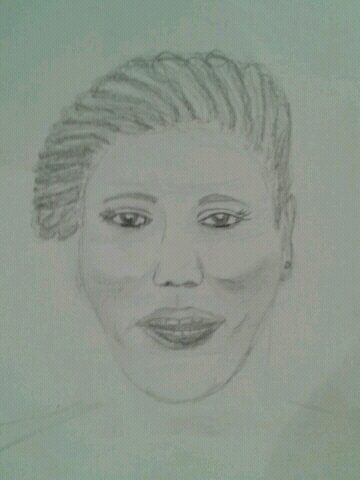
Anyway, the journey so far has helped me to produce the following pieces, which are particularly recogniseable from the Betty Edwards teaching style;


I thought these would come in handy...


Perhaps I should cut that out?


Some more hand drawn images.....


Monday, 31 March 2014

Life Drawing Class - No. 5

I seemed to pick up the pace a little better today.  My sketches were a little more fluid, and I think I felt a little more relaxed in front of a naked stranger, - my modesty and sensibilities being formed from a behavioural schema I had acquired from my childhood, and no doubt, one that many older students in a similar situation may have cause to be reminded of.
Helen, the model, was completely un-fazed as usual, and her professionalism was gratefully acknowledged.


Friday, 21 March 2014

Reading & Responding, Part VII - Invictus

A recap on where I am so far on this project...

My reflections this week on the poem Invictus, and what images have come to mind outside of the poem, have lead me to the thoughts of being entrapped within a squalid prison, images of rats entering the prison cell and my research on rats in trenches from the first world war...

I'm in a frame of mind right now that takes me to thoughts of rats and where to find them...  In big cities?...  I wondered how a view of London might be represented with an alternative angle of perspective... So I found a couple of photos I took last year while I had been working in the city, while I was staying in the St Pauls area last year, and started doodling with a sketch...


I allowed my mind to wander, I started a drawing of the street behind the ClubQuarters Hotel where I often stayed during the past few years.  The reflections on the wet paving was interesting.


 I re-rendered my sketch into an acrylic....

An interesting excursion, ....the paved area gave me time to think further and spawned an idea, the idea of aspect and perspective.  What would a "Rat's-Eye" perspective be?

Tuesday, 18 March 2014

Drawing Transformations, Part VII

My quest to try out different styles of learning has lead me to continue the use of the book by Betty Edwards, "Drawing on the Right Side of the Brain" (2nd Edition, 2013).  As I am working through the exercises, I appear to be taking one step forward, and every so often, one step back it feels...

So I took some time to re-start the work on drawing upside down, and I'm glad to say, this is what I clearly needed to do to re boost my confidence today.

The drawing by Picasso, of the famous composer Stravinski was a great start...

Having taken the original and rotating it through 180 degrees, then copying it freehand, had the desired effect!


Later, a quick rendition of Spiderman drawn on a scrap of paper, upside-down, then corrected by 180 degrees as below also produced a good result too!.


I will continue to make the mantra of at least one drawing a day,  (as taken from the saying "Never a day without a line!...)

Monday, 17 March 2014

Drawing Transformations - Life Drawing Class No 4

Today prooved to be far more challenging for some reason.  I had been reading the book "Drawing on the Right Hand Side of the Brain" By Betty Edwards recently, and my attempts today seemed to be way off course for some reason.  Nevertheless, I will persevere!


Monday, 10 March 2014

Drawing Transformations - Life Drawing No. 3

I'm still rather tight in my arm movements in my Life Drawing today.  I think that I need to practice larger freehand drawings more often, simply because I am usually confined to using an A4 Sketchpad.  However, my attempts today have been created using shade and light, Chiaro e Scurro as I think the Italians might say...  Thanks to Helen again, the model, who is extremely patient with our (especially mine) attempts, and to Jill for her ongoing patience in tutoring our group.

I need to flex my arm rather than my hand, and I must practice using proportionate representation in these sketches.  Jill also suggested that I might try to use pencil to create an initial outline and then continue with Charcoal once the form is appropriately measured and represented.  I'm still rather embarrassed at my attempts of life drawing, - the other students have natural skill, but I think my efforts are way behind in both skill and fluidity.    Much to do ....


Tuesday, 4 March 2014

Drawing Transformations - Creativity & Reflections on Watercolour

Today was a self study day, on which I chose to review a number of U-Tube and Vimeo vignettes that had earlier been recommended to me.  It's so easy to use the technology of the internet to see how others develop their fluency and artistic creativity...

One video that thoroughly en-captured me was an older sequence recorded in 1991, by John Cleese, of Monty Python fame.


The video was taken during a speech he gave in the Netherlands, regarding "Creativity & the 5 elements needed for success"...   Whilst John is almost always associated with a somewhat left field or even asinine humour, this lecture he gave was without doubt in my mind, one of the most poignant and educational that I have yet seen.  Nothing short of brilliant, perhaps (To use his own parliance maybe!)... So, as it's in the public domain, here it is!... - Together with the notes I made at the time..

You need the following five conditions to get into an open mode;

  1. Space - Get away from the distractions of life, that keep you in a closed mode.  Seal yourself off. An oasis of quiet.   Space enough to play! NO DISTRACTIONS!
  2.  Time.  Create a specific slot / a moment to seal yourself off. JC believes this is at least 1 & 1/2 hours.  After an an hour and a half take a break... Don't try to do it continually - it won't work. Restart it some time in the future, after a few days of latent pondering perhaps.
  3. Time.  Time to reflect on your ideas created previously.  You should defer decisions until they actually NEED to be made, not when you have just come up with an idea.  Give yourself time to ponder.  Re-consider. Don't necessariliy go with your first solution. Think about it, stick with the idea, but consider how it can be adapted.  Play with the problem and solution to make it better.  The anxiety in trying to resolve something makes us uncomfortable, but stick with this anxiety!.. Ponder longer... Your solution will be more creative. (Avoid strangling creativity with false deadlines, defer the decision as long as possible).  IF will your pondering, someone else demands a decision, tell them that you will not come out of your discomfort of anxiety, as that is easy! 
  4. Confidence.  The fear of failure is the greatest of all.  PLAY!... Whatever happens, it is OK.  The fear of failure will stop you playing.  Take risks!... While being creative, NOTHING is wrong!
  5. Humour. This gets one from the closed mode to the open mode quicker than anything else!.. Without humour, even with serious problems, creativity will be stifled. Solemnity is an invention of the Victorian era.  "It serves pomposity and self-important egotists, humour is a threat to those types!... Humour is an essential part of spontinaety and playfulness.  Never be with people who crush free thinking, if you can help it... Anything goes, there are no bad ideas!... and giggle all you want"

And finally.... (which spookily John Cleese used as a regular phrase for a different programme);

...Keep your mind gently back to the problem... in a freindly and persistant way to ponder.  You will be rewarded out of the blue! - Precisely perhaps, when you least expect it!...

Make, (play with) random connections.  Afterall, new ideas are just simply the connection of two previous ones.  Make "Indeterminable (or Impossible) Interconnections", as Edward De-Bono once coined.  These inbetweeners (Remember Jaques Derrida, and his undecideables?) are usually connections to something else, - the stepping stones to new and better ideas, - so don't discount them as being silly or of no use.  They are useful, if only for you to get to the next stage; That being A NEW IDEA!...

------------------------------------------------ Humerous, creative mode on... ------------------------------------
...
... ... ...
--------------------------------Clear space, and some time later... Creative mode off -------------------------


Another very short, but inspiring vignette was that of Sonia Yekinni, a young British artist who provides an eloquent rendering of why Watercolours are so important to use for sketching.

One particular method that she uses, which I had not considered before seeing this, was to simply use a narrow tipped "fine-writer" (a fibre tipped pen) at the same time as her use of water-colour washes. Literally, creating a "wet (ink) in wet (watercolour)" sketchbook painted capture of a scene.  Hugely evocative and effective way of drawing and mark making.  I will definitely be adjusting my sketches accordingly as I love the wash quality of the combined mediums, - they are both simple, but also elegant.

And finally, I just loved this inspirational poster, it's something everyone could have on the inside of their front door!...  I wish I had seen this maybe 10 years ago!

 The original is courtesy from http://holstee.com/collections/staff-picks/products/holstee-manifesto-poster.

Monday, 3 March 2014

Drawing Transformations - Life Drawing Classes - No. 1 & 2

So today heralded my first experience and attempt to draw the female form.   It was a nervous experience, not only because of my natural inhibitions, but also because I would be drawing a subject that I was generally not confident to do.  This would have also the additional demand of being critiqued in real time whilst I was in the process of drawing the model, by my tutor Jill.

we started with a quick succession of 5 minute poses, to get our eyes synchronised and our arms and hands in to the mode of rapid freestyle drawing.

 Here are my first attempts, there's nothing for me to be proud of here I'm afraid;

And again the following week...


Sunday, 2 March 2014

Drawing Transformations - Part V. - Marking, Thinking, seeing and transforming; - about Portraiture.

I endeavoured to try something new, - to experiment today.  It was a rainy Sunday afternoon, nothing to do, couldn't go outside (Too cold, too wet), and my lovely wife was out working a weekend shift. So I took heed of the information I'd read in the morning; from the book by Betty Edwards, "Drawing on the right side of the Brain" 2013, 4th Edition, Souvenir Press, London, and I got myself a large A3 pad and a photograph of myself.

I then placed the photograph UPSIDE-DOWN, so my features were no longer completely familiar to me.  The exercise is designed to make one's left brain hemisphere (the side that controls language, structure, order, time, (and I suspect, anxiety), literacy and numeracy, recognition, and which in western cultures tends to be the more dominant side), to give up the task of recognising components it already knows and will encourage us to replicate (based on our memory of an object or component), and hand control, (by simply relinquishing it as too difficult), over to the right side.  The right brain hemisphere is responsible for spacial awareness, perceptions of light and shade, outlines, music and creativity, apparently...

So a good work out of the right brain hemisphere, without the dominant left one coming in and taking over ( often - as a caution in the book would remind, by hearing our own conciousness & voices (i.e. from the left hemisphere) and trying to interfere with proceedings, by saying "what about the washing; have you called your mum today; that thing needs fixing; you need to pay that bill" etc., etc.), was a great way to spend an hour or so, and then complete the exercise by writing up this blog!

So, this is what happened; this was my own process, it may be different for you as a reader if you try, but the important thing is to devote some uninterrupted time to the task, once a suitable upside down photograph is found of course.

The process;
I started by drawing the negative space, (upside down of course), first, and then carefully working on the proportions and positions of my facial features as quickly as I could, I then moved on to trying to get the shapes of shadows and values of colour and shadow delineated.

I worked quite fluidly, holding a graphite stick between all four fingers and thumb, so as to keep it's shallow / a near flat position as low as I could, effectively keeping the graphite stick in the same position of about 20 degrees, - as one would when picking it up by the whole length as it lay on a table.

This made for a much more expressive arm movement.  I was not controlling it with my hand alone, but with proportionately more-so, with my arm.  My wrist was almost still as its' responsibility was to keep the graphite stick at a shallow angle, and to feel and gauge the pressure of the tip as it made its' mark on the paper.  My hand's job was not to move the stick, but to simply hold the stick between all four fingers and thumb...

The outcome, which only took about 15 minutes of actual drawing, is shown below, correctly rotated of course!

It was almost an epiphenomenal!  (...easy for you to say)...
 It was comparatively easy to transfer my mental state from one which is usually ruled by my concious voice scrutinising and subconsciously judging "right & wrong" to one of just looking at shapes, drawing those shapes and ignoring any inner desire to correct a laid line or curve.

Interestingly, you will notice that my left brain hemisphere still managed to interfere and get in the way!... This can be seen as the tilt of my head has been "mirrored", and my right and left shirt collars have been transposed in the drawing.  This is because the left brain is continually trying to straighten what it perceives as right and left with reality and perception in tension.

What a wonderfully simple but fascinating exercise.  I was able to draw my face upside down in a much more fluid way than trying to use my conventional, controlling left brain hemisphere. This meant that I was drawing what I saw, not what I believed I was seeing (in other words, not letting the left hemisphere of my brain coming in to control and automatically putting it's own pre-recorded image through my right hand and it's usual movements).

Friday, 28 February 2014

Drawing Transformations, Part IV - Marking, Thinking & Transforming - Portrature

Today being a self study day (Fridays), I decided to devote it to the drawing transformations project.  Having considered a subject of portraiture for drawing & sketching, ...what better subject could I have but myself! (Big mistake perhaps? Well, it has been very difficult)...

I never realized what a significant challenge this would be!...  I have done perhaps 3 or 4 self portraits over the past 5 years perhaps, but I have never really been satisfied with the results.  Today, I decided to consider the "Imagining & Thinking" part of the project but instead of just imagining and thinking about a subject per se, I decided to investigate how the brain actually deals with the whole process of Image and Processing, = Imagining & Thinking...

My university course assistant tutor, Jo B. suggested some time ago, for me to read a book cited here;
Edwards, Betty (2013). Drawing on the Right Side of the Brain : A Course in Enhancing Creativity and Artistic Confidence. Retrieved from http://www.eblib.com
We are lucky enough to be able to get access to this book electronically, through the University Library, so I pored my self (figuratively speaking) into the book...  I will come up for air at regular intervals over this following weekend, but it remains my intention to read as much of it as I can!

Friday, 14 February 2014

Drawing Transformations, Part III - Looking & Recording

Looking & Recording
My drawing practice has been boosted by simply sitting in a public area for a couple of hours this afternoon.  My colleague and I started to draw profile portrait sketches of some of the students in the university's "Student Central" cafe.   This in itself was an interesting experience just from the point of view of social interactions!...  We developed a small crowd of onlookers whilst we sketched, this could be a little awkward at times as our self confidence has not reached the "comfortable" standard, against our drawing prowess.

Nevertheless, we pursued the exercise, it helped us to certainly produce work that extends the use of drawing in our practice.


Our aim overall is to experiment to a large degree;  I haven't lost sight of this and so a refresh of the objectives was useful to reflect upon...
"Using the suggested themes of marking, looking, imagining, recording, thinking and transforming, and timetabled drawing sessions as a starting point, explore what drawing might mean to you and your practice. 
Use this opportunity to explore the media, contexts and applications of how you use drawing in your practice, as well as developing new ways of working. 
I felt that the use of pencil and cartridge paper lensed a very traditional and secure way of re-imaging portraiture as a regularly recognised form of sketching.  What I intend to do sometime soon is to carry out exactly the same exercise again, but this time by using simple crayon and see the interaction with people to measure their expectations / shock / awe / disappointment or what ever else they express...  I think this will be a great test of audience participation and measurement.

Friday, 7 February 2014

Drawing Transformations - Part 2

I have spent some considerable time thinking over this last week what I could do to challenge myself for this project.

The task set for us is to develop a body of work that extends the use of drawing in our practice. We are free to use the suggested themes of looking, marking, imagining and thinking.  It has also been reinforced in our minds that this project is not just about using pencil and paper, the traditional means.  Far from it, contemporary "drawing" can include video, sound, paint sketches, photography, - pretty much any mark making or recording of a subject, object or thought.  One area that I think, which is of particularly relevant contemporary practive is the use of mobile smart phones.  I have one, wich is integrated with "Evernote", "Google Piccassa", and Blog-Spot, - each of these being repositories for making notes, capturing data / images or textual narratives.  we depend on these so much in this current culture.

I think what is of interest, is not necessarily the actual item being recorded, but the process of us choosing how items can be represented for later reflection.

I re-thought what our more traditional recording methods have been....

It was while I was sifting through some old photos that were given to me to consider as subjects for a pastel drawing, that I chose a picture of a beautiful sunrise, I'm not entirely sure where it was, I think it may have been taken it either in the Caribbean or in the US some time, but then again, it may have been in the Seychelles, as I remember fondly watching a similar spectacular sunrise there many years ago... Anyway, where ever it is, and whenever it was taken, doesn't really matter.  It just struck me as a beautiful typically aesthetically pleasing vista.  However, to subtly "con-temporise" it, I thought that by making the scene (which is relatively simple), as colourful as possible but without detracting from the essence of the original would be a nice starting point....


This was the result, done in soft chalk pastels, - a new medium that I have never used before, but I was pleased with the results;   The soft chalk was a lovely medium to capture the waves and lapping seawater.

Wednesday, 29 January 2014

IT Adobe Illustrator exercise

Well, what can I say!... What a fantastic tool Adobe Illustrator is!

I spent a couple of hours in the computer / CAD labs this morning, following on from a tutorial given during the same time last week.  So, in a total tutorial of 3 + 3 = 6 hours, we were given the full introduction to Adobe Illustrator.

I have copied my notes below to serve as a future repository and Aid Memoire...

We started off the session as one might expect, by creating a new file.  Adobe Illustrator (Ai) uses vector graphics mapping rather than raster point manipulations.  This means that any images created in Ai can be scaled in a virtually infinite range.  This makes the package much more superior to software that provides an out put as a bit-map.  Bit maps can only be scaled up by a very small order of magnitude before the image becomes pixilated and looses resolutional sharpness.  Vector graphics avoids this loss of quality by mathematically drawing objects between and to points of anchorage or intersection.

The only limitation to vectoring is that packages cannot create automatic shadows and transparencies in the same manner, however there are simple techniques to create these and convert them to raster graphic images.  This can be done up to 300 ppi which is suitable for printed matter.

We used a .jpg image as our template, and using a verity of line tools build up various layers of the image.

Explored the elipse tool, and a tip being to press [SHIFT] key whilst selected to create perfect circles.

Anchor points can be defined through the line tool, and by click and drag on next anchor allows for quick bezier curves to be formed. Click again on the same end anchor point to remove secondary bezier curve handles  / in order to change curve directions sharply.

A quick mothod of arranging object orders on an art board is to select the object and use;

 [SHIFT] [cmd] '['   = Arrange, shift back, or the reverse is [SHIFT] [cmd] ']' to Arrange shift forward.

A handy colour to remember is 112 / 90 / 62 for basic flesh tones

Using Object and Path command can produce a huge variety of effects, the finished exercise is shown above, Marilyn.


Friday, 24 January 2014

Drawing Transformations, Part 1

Our new project for this semester, which runs concurrently with the other projects of 'De-constructing the Grand Master' for the first 6 weeks, then with "Reading & Responding" for the remaining 6 weeks of this semester, is entitled "Drawing Transformations".

My initial research lead me to the wonderful book, "The Primacy of Drawing" by Deanna Petherbridge, 2010, Deanna Petherbridge.   I have been extremely fortunate in being given a new copy of this book as a gift.  It truly is a magnificent piece of research, extending to about 500 pages.  In the first sentance of the book, Deanna Petherbridge captures something that I also truly believe in;

"Drawing is the basis of all art and visual thinking"
(Paragraph 1, Page 2, The Primacy of Drawing, Deanna Petherbridge, 2010).

This fits nicely to with a mantra that I have tried to follow from my very first week at university, which is;
"Never a day without a line"
I'm looking forward to this project.  I know it will help to challenge my techniques which will of course help me to improve my overall ability in the craft.  I'm keen to try new methods too, as our breifing for this project recommended that we should not only think about the subjects but also to think  and research about our methods, processes and expressive conversions.